

Year in Review 2025

#Open Elements

It was a successful year — the Open Elements year 2025. The growth trajectory from 2024 continued to accelerate. New projects were initiated and existing ones were transferred. The number of employees grew and the team became closer, with the offsite in spring playing a major role. The versatility of the company was visible at various levels and stages: from extensive engagement in open source foundations and associations, to supporting and expanding international knowledge transfer, to local activities and co-shaping regional networks.
One thing is clear: The joy in one's own work is a powerful motivator that constantly generates new ideas, ensures growth and added value, and keeps pushing the boundaries further.
Participation in Open Source Foundations
Hendrik Ebbers was elected to the Board of the Eclipse Foundation for the second time in early 2025, and just under a year later (in December 2025) was elected Vice Chair of the Technical Advisory Council of the Linux Foundation Decentralized Trust. This is a tremendous achievement that reflects and recognizes Hendrik's open source engagement, leadership, and expertise.

Open Elements works with all major open source foundations
Open Regulatory Compliance Working Group
Open Elements is a founding member of the Open Regulatory Compliance Working Group (ORC WG), which was announced by the Eclipse Foundation in September 2024. The working group serves as a bridge between government agencies and the open source ecosystem. It operates at the EU level and works directly with the EU Commission, ensuring that global regulations are implemented sensibly and that open source technologies can continue to be used as an important component of software products. Sebastian Tiemann has been an active member attending all ORC WG meetings since 2025, contributing to the topics.
Hiero, Hashgraph & Hedera
Hendrik Ebbers continues to lead the Technical Steering Committee (TSC) of Hiero, which grew to 9 members from 6 different companies over the past year. He is co-responsible for the successful complete migration of Hedera code to the Linux Foundation. Since March 2025, the Hedera network is 100% based on the open source and vendor-neutral Hiero. The first productive software releases under Hiero were published as early as the first quarter of 2025.

Open Elements is one of the most active members in the Hiero project
As an external contributor, Hendrik Ebbers was appointed Director of Open Source at Hashgraph in 2025 due to these achievements.
Linux Foundation
Hendrik Ebbers was elected to the Technical Advisory Council (TAC) of the Linux Foundation Decentralized Trust (LFDT), another great recognition of his engagement. This gives him another senior position — in addition to his role at the Eclipse Foundation.
Regional Engagement in the Ruhr Area & Uganda
Ruhr Area
Open Elements is an active founding member of the Digital Sovereignty Expert Group of Der Mittelstand. BVMW e.V. and continues to support the Java User Group (JUG) Dortmund, including professional recording of meetups for later viewing. A working group was initiated by Open Elements together with TU Dortmund and Fraunhofer IML to strengthen Distributed Ledger Technology (DLT) in the local area. The funding comes from the Hedera Foundation and aims to expand community diversity. In collaboration with the Projektspeicher, an entire lecture series on "Decentralized Trust" is being created, with individual events offered as hybrid events. The first lecture evening is scheduled for February 25, 2026 at the Projektspeicher Dortmund.
The Digital Week Dortmund (DiWoDo) was a great start to September. Open Elements was represented multiple times in the program with various formats. From exhibition booths to workshops and talks to participation in several panel discussions, it was an intense and eventful week. The significantly expanded collaboration with Der Mittelstand. BVMW e.V. and the Projektspeicher made the realization work out excellently.
Uganda
Open Elements signed a Memorandum of Understanding with Bugema University. Together, they aim to make the topic of open source more accessible to students. A great success was the first Open Source Meetup Kampala, which took place at the university with over 100 participants. Among other things, Hendrik Ebbers gave an interesting talk on "Open Source Contribution," which received a lot of positive feedback.

Students from Kampala meet at an Open Elements-sponsored meetup
The two developers Jessy Ssebuliba and Noah Tayebwa led the event to strengthen global exchange and to build sustainable learning and innovation networks. This enables the lasting promotion of Open Knowledge and international knowledge exchange.
Own Open Source Projects
Further added value was demonstrated with the release of the OSS project "Conduct Guardian." It allows using AI activities to check comments on GitHub against a project's Code of Conduct. Maintainers are notified of violations, available at https://github.com/OpenElements/Conduct-Guardian.
Or the new graphical concept and layout of the Eclipse Adoptium website. This was implemented jointly by Open Elements and Microsoft. The website itself is also completely open source and can be used as a source for other sites. Two open source projects from Open Elements (Hiero Enterprise Java / Hiero Solo Action) were transferred to the Linux Foundation and integrated into the Hiero project to enable vendor-neutral further development. As a result, Noah Tayebwa became an official Committer of the Linux Foundation. This is a wonderful confirmation for the young software developer.
Support & Care
In January, the kickoff meeting marked the start of work on Apache Maven™. Through the funding project via the Sovereign Tech Fund (STF), even closer collaboration with the community was achieved throughout the year. This meant that three additional Maven maintainers worked on the topics at Support & Care that were financially supported by the STF. Open Elements is currently the only company working on Maven with full-time developers. What was important to the company was the confirmation that with respect, transparency, and trust, excellent collaboration between companies and individuals is possible.

Open Elements introduced and established the commercial program Support & Care for Apache Maven™. The subscription model enables companies and organizations to contribute to long-term stability and further development and to generate direct added value. This includes direct access to maintainers and experts for information about necessary bugfixes and their prioritization. The use of monthly support hours and participation in regular webinars with experts is also included. Together with the cooperation partner Socreatory, Open Elements offered the first Apache Maven training courses. The masterclass focuses on developing stable, traceable, and maintainable build processes. More information and dates can be found at Trainings in 2026.
Publications, Talks, Conferences, and TecTalks
The Eclipse Foundation published an interview in January titled: "Connecting People, Inspiring Learning: Stories from Eclipse Contributors in Uganda" about the work of Jessy Ssebuliba and Noah Tayebwa. They reported on the impactful connections through their activities in open source projects and the opportunities that arose from them at Open Elements. This led to both of them being able to attend the OSCA Festival. As shown in this article, both supported the Eclipse Foundation at Africa's largest open source event by sharing their own success story.
Hendrik Ebbers published a blog post at LF Decentralized Trust on February 12, 2025 about the current state of Hiero titled: "Hiero: Advancing Decentralized Trust Through Open Source Innovation", and Sebastian Tiemann made a name for himself with his first blog post on the Open Elements website on the topic of "Reproducible builds". More articles will follow.
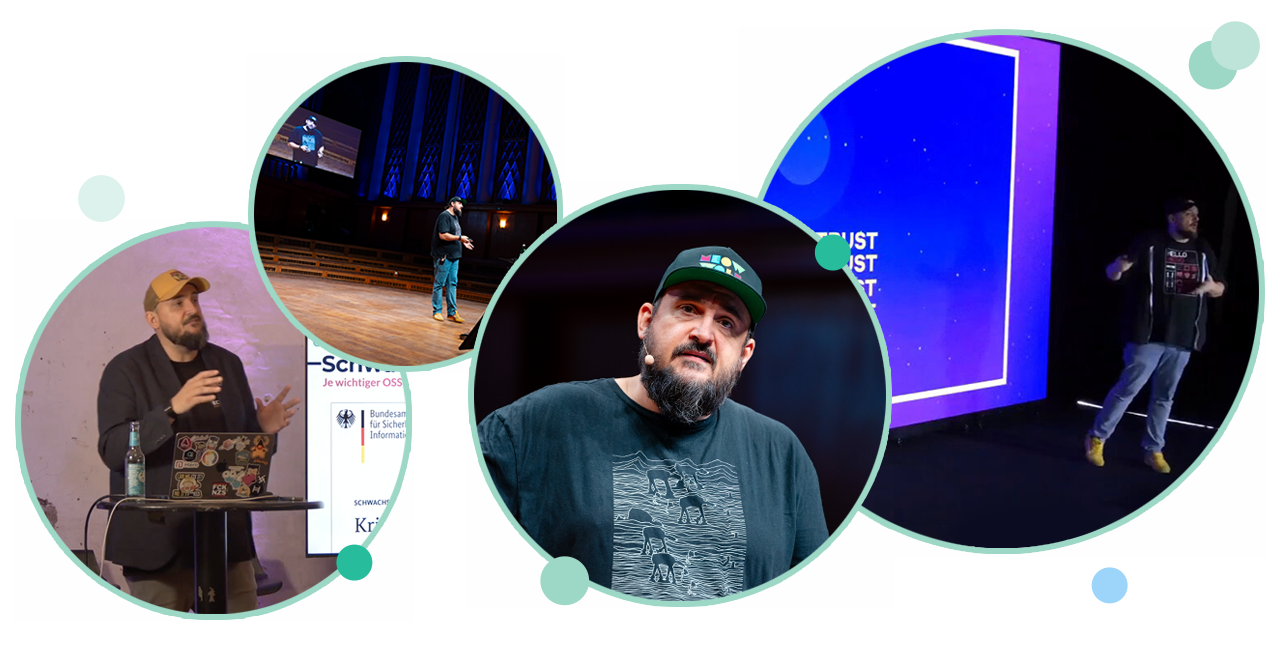
CEO Hendrik Ebbers uses 2025 to actively spread knowledge about open source
In September, the whitepaper "Open Source Software — Underestimated Value for Companies, Public Administration, and Municipalities" was published by Open Elements. The clear presentation of figures, data, facts, advantages and risks, details on return on investment, a glossary, and a recommendation for action provides an easy-to-understand guide that offers a good introduction to the topic.
At DiWoDo, the Open Elements team was on stage multiple times. Hendrik Ebbers was there with his talk "Understanding Open Source" and as a participant on the panel "Digital Sovereignty: Tech Independence, Competitiveness & Resilience", while Sebastian Tiemann gave his first talk on "The Cyber Resilience Act from a Developer's Perspective" for the JUG.
Conferences
In February, Hendrik Ebbers met Roger Brogan, Director of Solutions Architecture at Chainlink Labs, in New York, along with Biser Dimitrov, Global Head of Digital Assets Technology at Citibank in New York. In the panel talk at the meetup, the three discussed the future of blockchain technologies in banking and changes in digital payments, specifically about "private and public DLTs." In March, he gave a talk on Hiero at HederaCon in Denver to the Hedera community. Furthermore, he presented Hiero at various conferences, including WeAreDevelopers in Berlin and RareEvo in Las Vegas. It was a surprise when he was invited as a speaker to Global Digital Collaboration in Geneva. There, he explained to the expert audience from the UN, the EU, and the WHO how the storage of digital identities can be implemented securely and transparently — based on open and vendor-neutral Distributed Ledger Technology (DLT). The talk was an important building block for the digital future and was met with broad approval.
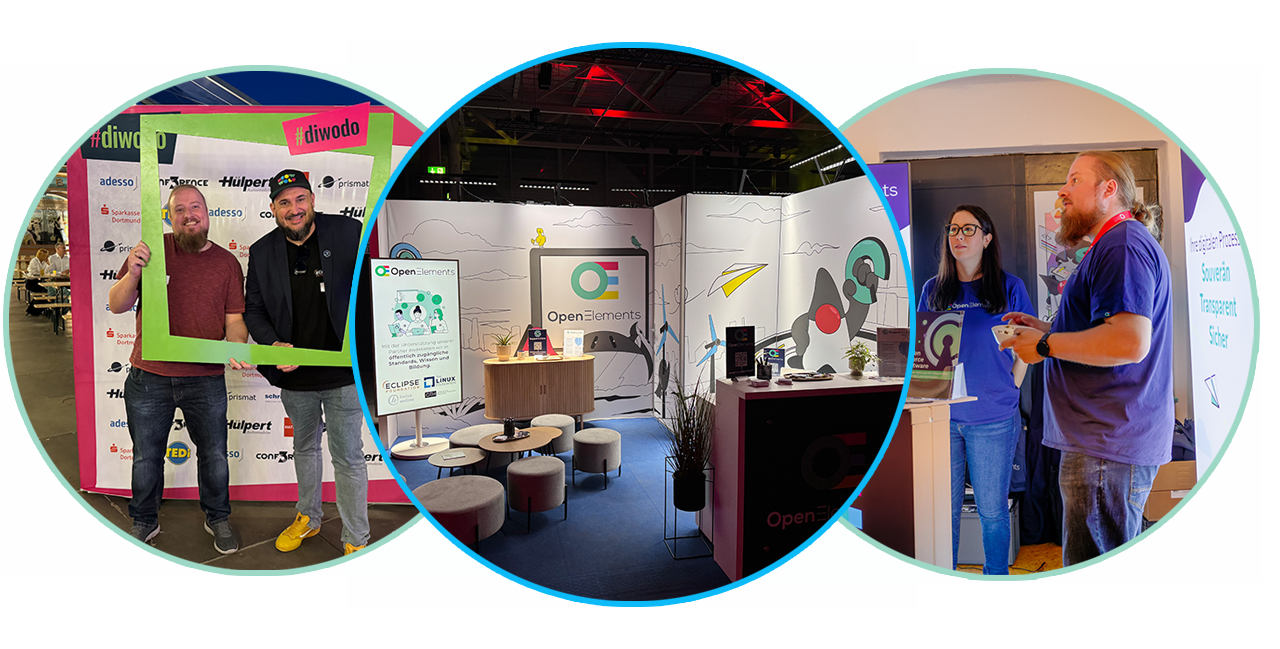
Open Elements was represented at various conferences with booths and talks
Open Elements was one of the main sponsors of JavaLand, one of the largest Java conferences in Europe. There, the company's first large exhibition booth was heavily frequented by attendees who informed themselves about open source, digital sovereignty, Apache Maven™, and Eclipse Adoptium. The interest was fueled by several well-attended talks that Hendrik Ebbers gave during the conference. The strategy paid off and brand marketing was successfully expanded further. Open Elements was the only company featured on the conference lanyards, and all visitors received tote bags printed in company colors and with the logo, filled with some merchandise products. At Conf3rence in Dortmund, Hendrik Ebbers was able to participate in the panel talk "Your Identity, Your Rules: The Evolution of Identity in the Digital Age" in his position as Director of Open Source at Hashgraph.
TecTalks
In three hours, the technical workshop "Unleash the Power of Hiero: A Developer's Guide to Our SDKs" by Hendrik Ebbers covers all the information needed to get started with the Hiero project. The recording is still available on YouTube. Open Elements was a guest at the Java User Group (JUG) in Switzerland. The lecture tour took the team through five meetup stops from Basel to Zurich, Bern, Lucerne, and St. Gallen. Additionally, there were exciting discussions on two main topics: "Open Source — Hobby Work vs. Paid Work" and "Supply Chain Security — (How) Can Open Source Help?". What was especially nice was that personal exchange and good conversations were not neglected.
In October, the Adoptium Summit took place. Hendrik Ebbers took on the moderation, while Jessie Ssebuliba and Noah Tayebwa were speakers and reported from their perspective about the Adoptium Contributor Program: "From first contribution to paid OSS Developers".
Here is a list of all TecTalks available on YouTube:
- Unleash the Power of Hiero: A Developer's Guide to Our SDKs
- Hiero: Vendor Neutral Home for the Tech of Hedera & Future DLT Standards
- Hendrik Ebbers - Jakarta EE Contributor Stories
- Open Source as a Factor of Trust
- Hiero Workshop @ Rare Evo
- Open Source Verstehen
- Panel - Digital Sovereignty: Tech Independence, Competitiveness & Resilience
- Hedera Technical Community Call: Leveling-Up Hedera: Batch Transactions & Hiero
- Cyber Resilience Act from a Developer's Perspective
Open Elements Inside
In April, the company's first offsite took place. The entire team, including Jessy Ssebuliba and Noah Tayebwa from Uganda, met in Italy to collaborate for two weeks in a relaxed atmosphere and get to know each other even better. In addition, there was a summer party in September, which, under the motto "Open Elements & Friends," brought everyone together once more. The great successes of the first half of the year were celebrated with partners and clients in wonderful weather.
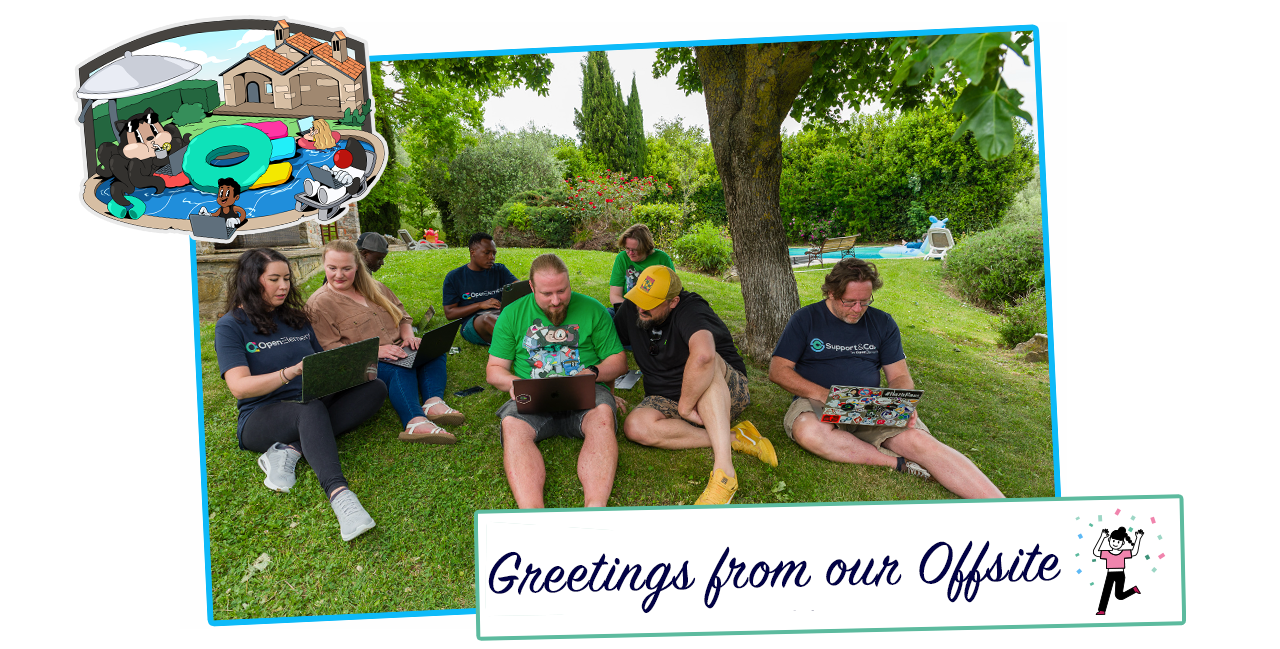
In October, Open Elements began the process of establishing its own company in Uganda.
Team Expansion
Catrice Keibel started in February as a working student. The future software developer is learning Python and plans to strengthen Open Elements in the Hiero community. She is also responsible for social media marketing and publishes interesting news weekly on the LinkedIn company page.
Sebastian Tiemann has been on board since April as a full-time developer and supports the team behind the Support & Care project through endless contributions to Apache Maven™. His work includes co-shaping the strategic direction of Open Elements by being increasingly active in working groups, such as the ORC WG (Open Regulatory Compliance Working Group) or the Digital Sovereignty Expert Group of Der Mittelstand. BVMW e.V.
Software developer Daniel Ntege started in September and supports Jessy Ssebuliba and Noah Tayebwa in Kampala (Uganda). He successfully completed his studies at Bugema University and is now taking the Open Elements Cloud to a new level by providing and integrating important functionalities such as Single Sign-On, 2-Factor Authentication, and centralized logging for the services. All based on open source components, of course.
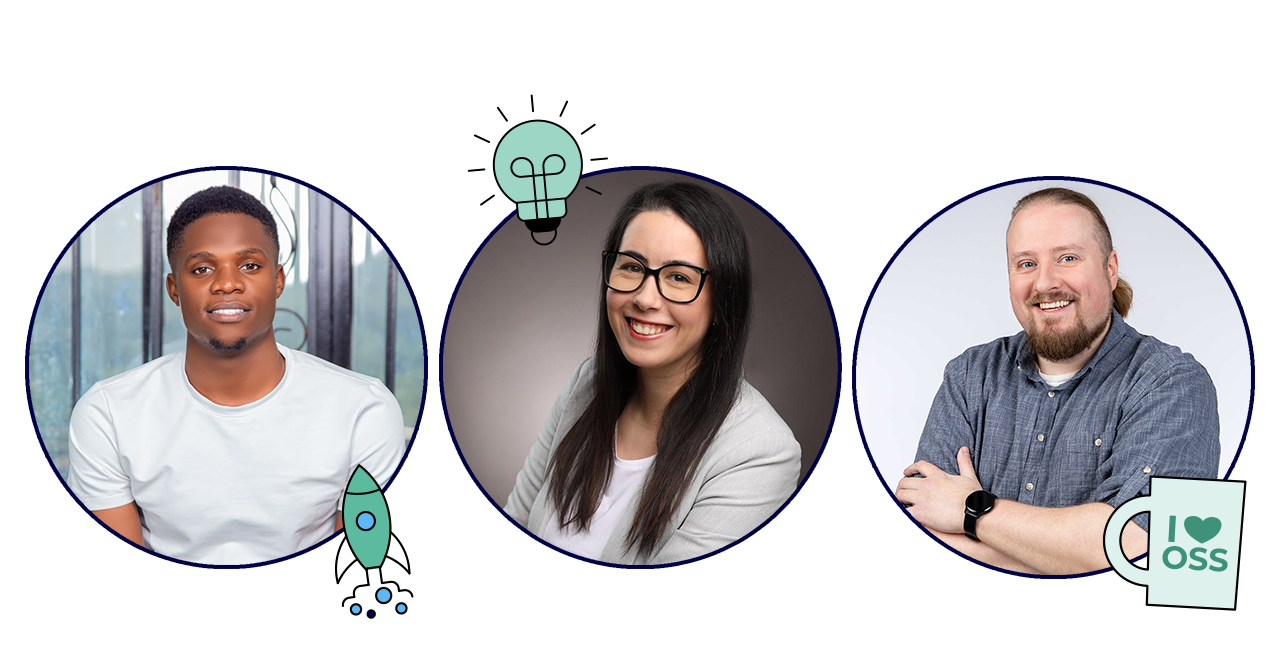
Daniel, Catrice, and Sebastian have been strengthening Open Elements since 2025
Sandra Parsick and Gerd Aschemann have been closely connected to the company as freelancers since its founding and have always been involved. Over the past year, both worked largely full-time for Open Elements — and Sandra Parsick became a Maven Committer. Both — together with Hendrik Ebbers and Sebastian Tiemann — made the Support & Care project what it is today. External contributor Lisa Schäfer is also part of the Open Elements family. She is an excellent moderator and supports the company in all workshops, retrospectives, and business meetings.
Open Data
In the spirit of the Open Data mindset, Open Elements also makes internal data publicly available.
- Here you can find the website statistics.
- For the management of work on Apache Maven™, funding was approved by the Sovereign Tech Fund (STF). The activities were fully disclosed on GitHub: https://github.com/support-and-care/maven-support-and-care/tree/main/src/docs/reports/2025. A simplified presentation of the data is planned for 2026.
Open Knowledge
Open Elements shares its knowledge in various ways. Several articles are available on the website blog (in English and German). On YouTube, there are now over 100 technical talks by Hendrik Ebbers; here is the overview of TecTalks. Additionally, the recordings of the DiWoDo talks are available on the company's YouTube channel. In collaboration with OTH (Ostbayerische Technische Hochschule) Regensburg, Hendrik Ebbers holds a teaching assignment for the fundamentals of Distributed Ledger Technologies (DLT). Here is an excerpt from the course catalog.

Freely accessible knowledge and open data are a matter of course for us
Donations
Open Elements donated monthly contributions to the following non-profit associations, organizations, or open source projects:
- Wikipedia
- CORRECTIV
- Eclipse Adoptium OSS project
- Testcontainers OSS project
- JUnit OSS project
- Coolify OSS project
- Etherpad OSS project
- Authentik OSS project
- Vikunja OSS project
- Gatus OSS project
In addition, individual donations were made via GitHub Sponsors to contributors working on critical OSS projects. Open Elements donated to atmosfair as compensation for all flights taken.